
Ever wonder if you could “fix” Checkers?
Ever wonder if you could “fix” Checkers?
GAME DESIGN
2/24/20262 min read
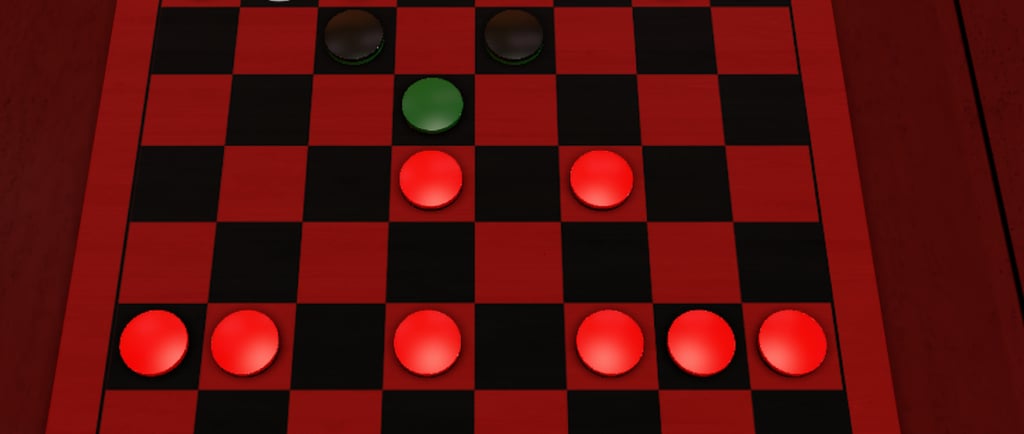
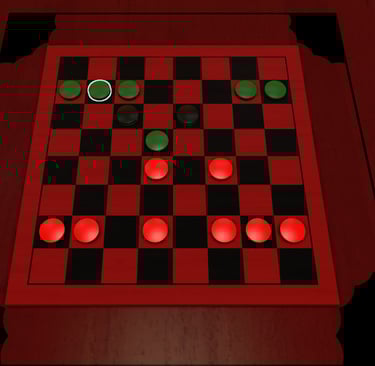
It started with a playtest session for a different project—a dice-based Connect Four variant. My colleague and I fell down a rabbit hole: What classic, simple game could be transformed by adding more player agency? Checkers was the obvious candidate. It’s iconic, but the decision space is fairly narrow. We wanted to give players more meaningful choices, so we started brainstorming how to integrate dice.
The “Aha!” Moment
We actually stumbled across an old April Fool’s post about a “Checkers: The Dice Game” expansion. While that was a joke, it sparked a real idea: What if the way a piece moves depends on its current state?
Here was our initial concept:
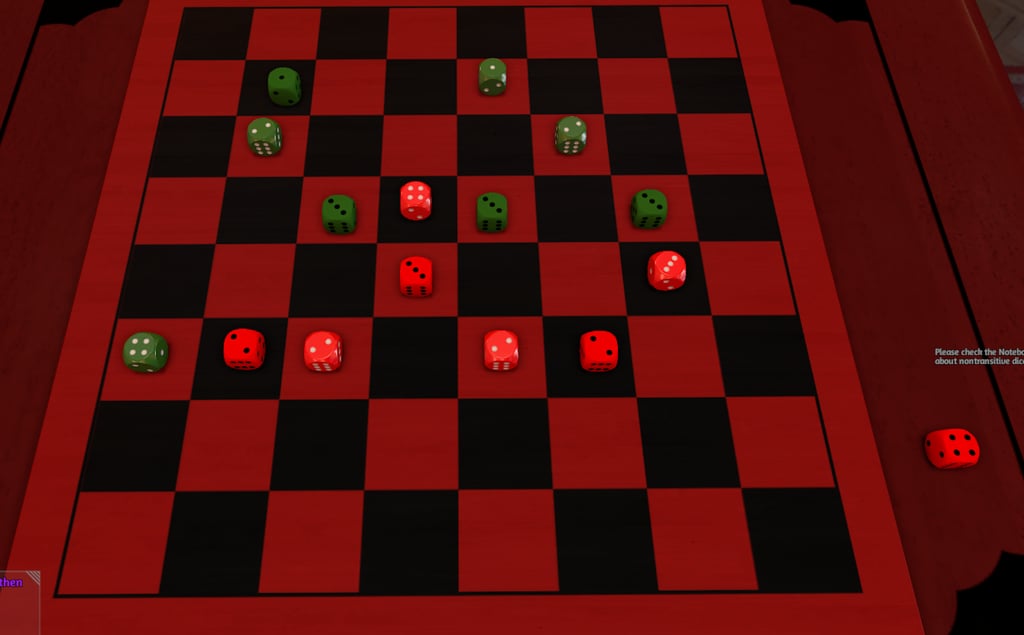
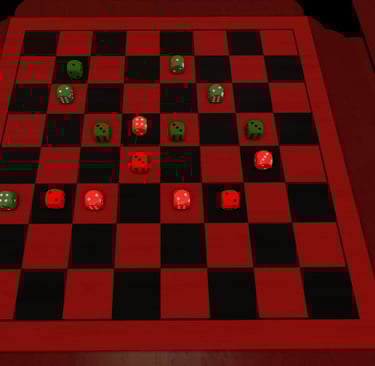
Every piece is a die.
Every time you move, you increment the value.
Even numbers (2, 4, 6): The piece moves orthogonally (up, down, left, right).
Odd numbers (1, 3, 5): The piece moves diagonally.
This immediately changed the math of the game. You have to think three moves ahead to ensure your piece is in the “correct” state by the time it reaches an opponent’s piece.
From Dice to Discs
I whipped up a prototype in Tabletop Simulator, but after a few rounds, I realized something: the dice were overkill. The pieces really only have two states: Even or Odd.
Instead of fumbling with dice, why not just use double-sided, two-color coins? Every time you move a piece, you flip it over to change its movement profile.
The Result?
The gameplay is surprisingly deep. It creates the tense standoffs you see in Chess rather than the predictable loops of standard Checkers. You can’t just block an opponent—you have to anticipate their “geometry” two turns from now.
I’m officially moving forward with development on this one. Currently, I’m calling it “Parity”. It’s amazing how a simple “flip” can change a centuries-old game.
What rule would you add, or remove, from a classic game to make the game more interesting?